
Antique / Vintage Engagement Ring History

Modern engagement rings often follow a familiar, mass-produced formula. Antique and vintage engagement rings do not. Their history is a captivating journey through changing tastes, master craftsmanship, and deep symbolism—from the hand-fabricated gold of the Georgians to the bold, crisp geometry of Art Deco.
For collectors and couples alike, understanding this history is key. A genuine antique ring is more than just "old"; it is a wearable piece of art that reflects the soul of its era.
Why Antique & Vintage Engagement Ring History Still Matters
In an age of standardized manufacturing, period rings offer something rare: individuality. Before the dawn of modern technology, every piece was a "one-of-one."
Hand-Cut Brilliance: Stones were shaped by eye, giving them a unique light play (like the famous Old European Cut).
Era-Specific Details: From the romantic motifs of the Victorians to the architectural lines of Art Deco, these rings possess a "presence" that modern replicas struggle to mimic.
Value & Integrity: Knowing the design language helps you distinguish a rare Edwardian platinum filigree from a later reproduction.
1. Georgian Engagement Rings (1714 – 1837)
The Rarest Treasures
Georgian rings are the "holy grail" of antique jewelry. Because many were melted down or altered, surviving pieces are incredibly scarce.
Materials: Typically silver-topped gold.
Techniques: Closed-back settings with foil-backed stones to enhance brilliance under flickering candlelight.
Character: You’ll find Rose cuts and early Table cuts, giving these rings a soft, moody glow rather than a sharp flash.

2. Victorian Era: Symbolism & Romance (1837 – 1901)
Sentimental Masterpieces
Queen Victoria’s own love story influenced an entire generation of jewelry. This era was all about emotion.
Motifs: Snakes (symbolizing eternity), hearts, flowers, and stars.
Gemstones: While diamonds were prized, sapphires, rubies, and pearls were equally popular in engagement settings.
The Look: Rich yellow gold and "Old Mine" cut diamonds that offer a warm, chunky sparkle.

3. Edwardian & Belle Époque Refinement (1895 – 1915)
Lace in Metal
The Edwardian era brought a newfound lightness to jewelry, thanks to advances in platinum working.
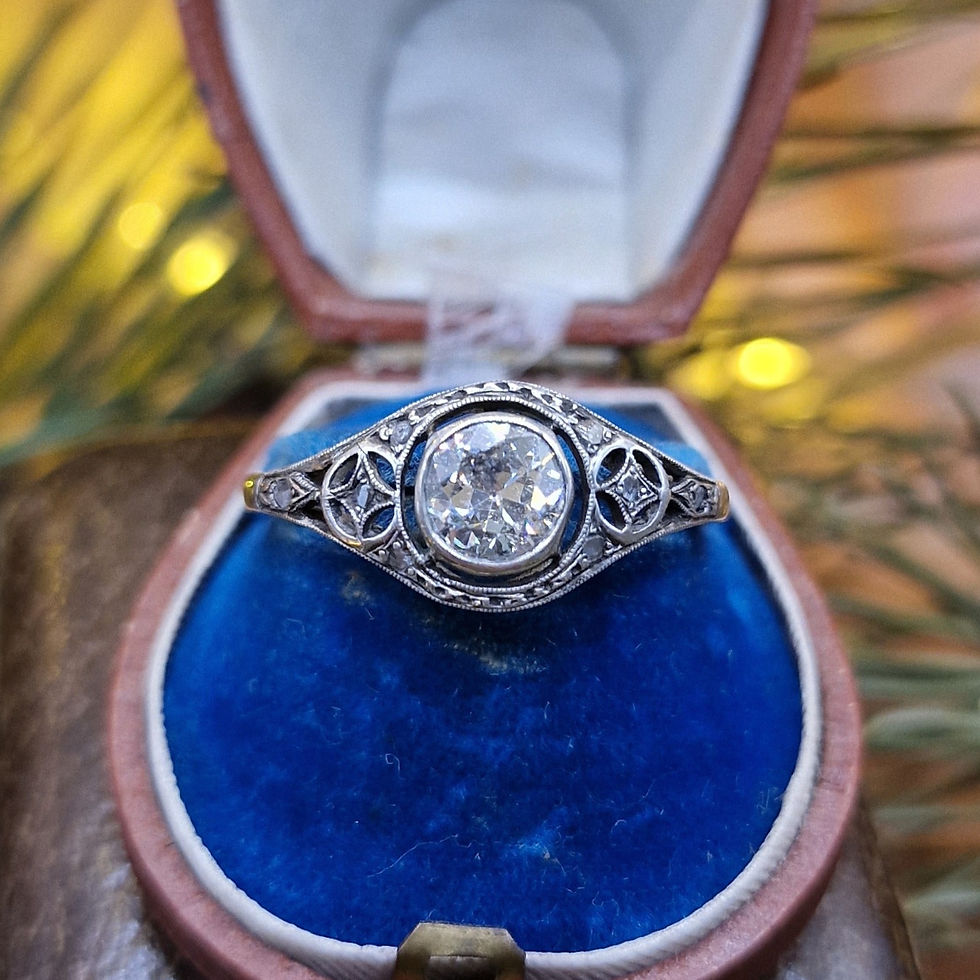
The Signature: Fine pierced metalwork, milgrain edges, and delicate filigree.
Refinement: These rings feel airy and ethereal. This period perfected the use of Old European Cut diamonds in secure yet invisible-looking platinum mountings.

4. Art Deco: The Architectural Shift (1920 – 1939)
Bold Geometry
Art Deco changed the engagement ring forever. Symmetry and clean lines replaced the floral fluidity of the past.
Visuals: Calibre-cut accents (emeralds, sapphires, onyx) and strong linear compositions.
Modern Appeal: Because of their disciplined structure, Art Deco rings feel surprisingly contemporary today.
The Transition: This era saw the rise of transitional cuts, bridging the gap between antique and modern brilliance.
Why Buyers Keep Returning to Period Rings
The attraction is simple: Visual Distinction.
Old mine cuts and rose cuts reflect light with a broader, softer rhythm that feels alive. Historic mountings show the tiny, beautiful "imperfections" of a human hand—engravings and proportions that machines simply cannot replicate.
Choosing an antique engagement ring is about more than just aesthetics; it’s about owning a piece of history that has already stood the test of time.


Comments