
Ethical Reasons to Buy Antique Jewelry Today

An Old European cut diamond ring or a Victorian rose-cut pendant begins with materials that are already above ground. Choosing a piece crafted decades or centuries ago naturally aligns fine luxury with modern environmental stewardship.
For collectors and intentional buyers, ethics and aesthetics meet seamlessly in antique jewelry. By choosing existing craftsmanship over newly mined production, you acquire a one-of-a-kind treasure while completely bypassing today's industrial extraction cycle.
1. Quick Comparison: Antique Jewelry vs. Newly Mined Luxury
Feature | Fine Antique Jewelry | Contemporary New Production |
Environmental Footprint | Zero new mining required | High energy, land, and water usage |
Supply Chain Transparency | Fully recirculated historical object | Complex, multi-stage global processing |
Manufacturing Philosophy | One-of-a-kind hand craftsmanship | Standardized, high-volume production |
Sustainability Model | True Circular Luxury (Kept intact) | Resource-intensive raw extraction |
Aesthetic Identity | Atmospheric candlelight fire & patina | Uniform, high-output white sparkle |
2. Key Ethical Advantages of Buying Antique
A. Zero Demand for New Mining Extraction
The primary ethical distinction is forward-looking: acquiring an antique ring or pendant does not create fresh demand for mining diamonds, gold, or platinum today. Bypassing modern mining avoids the land disturbance, energy consumption, and complex supply-chain traceability issues associated with newly extracted raw materials.
B. True "Circularity" in High Luxury
Circularity is often discussed in abstract terms, but antique jewelry makes it tangible:
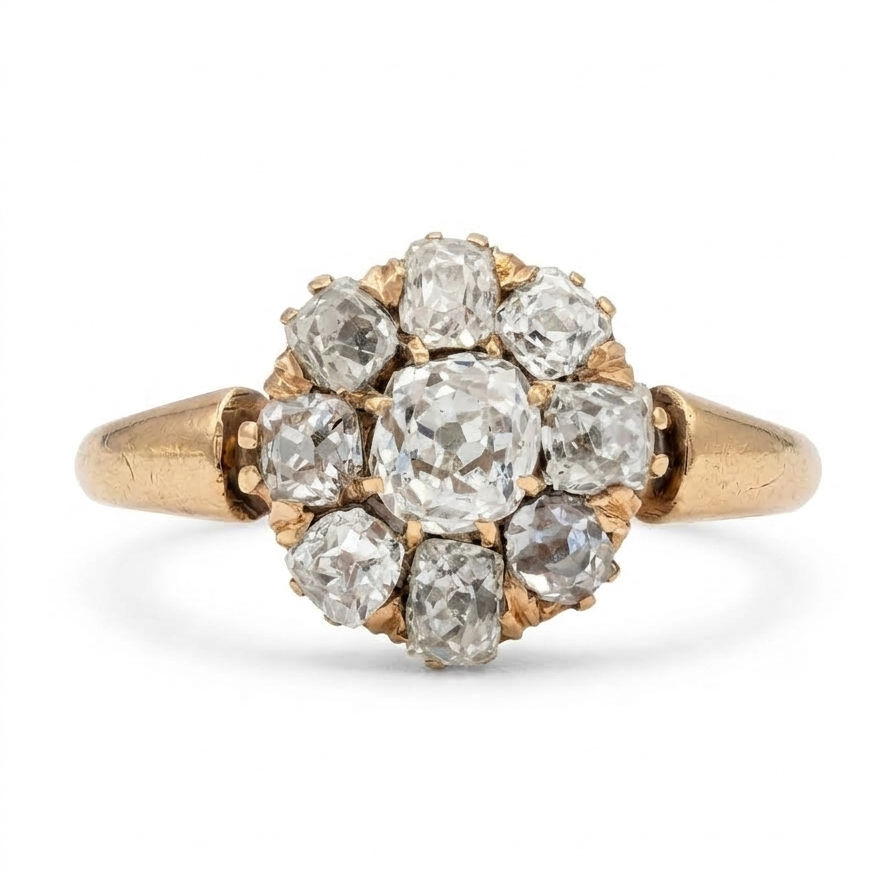
Kept Intact: A Victorian cluster ring is not melted down or crushed into raw components—it retains its complete artistic, historical, and structural integrity.
Continued Stewardship: The labor, energy, and precious materials invested generations ago continue to serve their original purpose for a new owner.
C. Honoring Hand-Craftsmanship Over Mass Production
Before standard laser cutting and mass casting, jewelry was sculpted by master artisans. Details like hand-pierced galleries, millegrain edging, and individually faceted old cut diamonds (Old Mine, Old European, Rose cuts) reflect personal artistic judgment rather than a calibrated corporate formula.
Expert Insight – Preservation Over Recutting: True ethical stewardship extends to how an antique jewel is maintained. We strongly advocate for preserving original hand-cut diamonds in their historical state. Recutting an Old European cut to meet modern factory symmetry erases its irreplaceable historical soul and reduces its true collector value.
3. Responsible Ownership & Long-Term Care
Choosing an antique piece is a vote for repair over replacement. A loose stone can be secured, worn prongs can be rebuilt, and a shank can be stabilized by a skilled bench jeweler—preserving heritage skills that resist disposable culture.
To practice responsible stewardship with your collection:
Respect Delicate Construction: Keep Georgian foil-backed settings away from water, and save fragile Art Nouveau enamels for occasional wear.
Opt for Protective Mountings: For an everyday engagement ring, choose sturdy Victorian gypsy settings or Art Deco platinum mounts.
Perform Annual Checks: Have an antique jewelry specialist inspect prongs, catches, and stone security at least once a year.
Summary: A Purchase with a Longer View
At Old Cut Jewellery, we believe the most sustainable jewel is the one that has already endured for a century and remains ready for its next chapter. Buying antique is not simply an ethical preference—it is a conscious, lasting decision about what true luxury should represent.


Comments