
Old European Cut Diamond Guide: Antique Charm vs. Modern Precision

A modern round brilliant is built for precision, governed by strict mathematical calibration. However, an Old European Cut (OEC) diamond is valued for something else entirely: warmth, depth, and a hand-cut presence that feels alive the moment it catches the light.
For collectors and couples seeking an engagement ring with historical soul, understanding the nuances of the OEC is the first step toward finding a masterpiece.
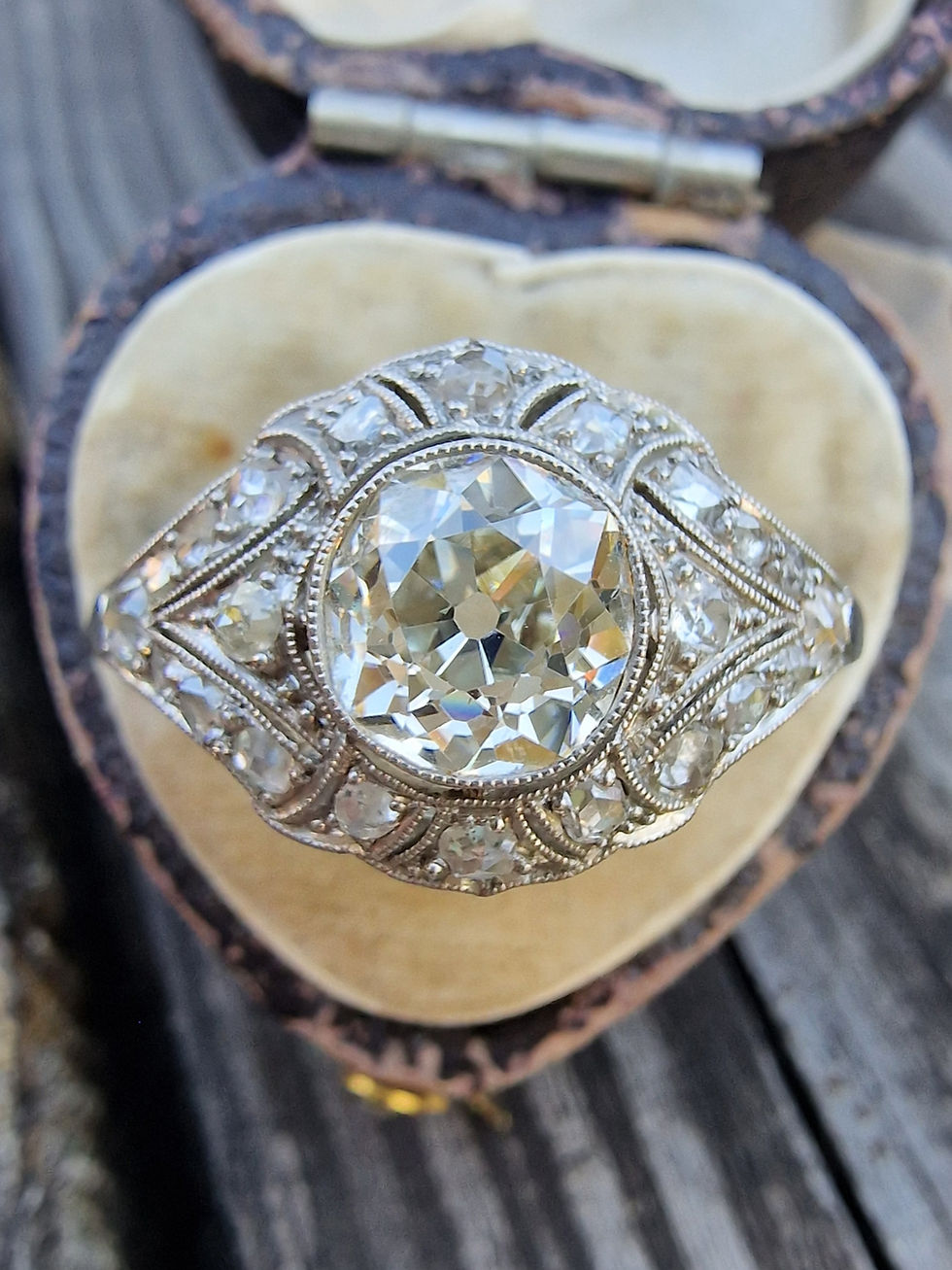
What Defines an Old European Cut Diamond?
The Old European Cut is the direct predecessor to the modern round brilliant. Hand-cut primarily between the late 19th century and the early 20th century, these stones reflect an era where diamonds were shaped by candlelight and individual craftsmanship rather than laser technology.
Technical Anatomy of the OEC
While OECs are round in outline, they rarely possess the sterile symmetry of modern stones. To identify a true Old European Cut, look for these four hallmarks:
Small Table: The top flat facet is significantly smaller than on a modern diamond.
High Crown: The diamond sits taller, creating a distinct silhouette.
Deep Pavilion: A bulkier bottom portion that holds light longer.
Visible Culet: The bottom tip is faceted (flat) rather than pointed, appearing as a soft "inner circle" when viewed through the top.
Expert Insight: These proportions mean the stone returns light in broader, slower flashes (known as "blocky" fire) rather than the sharp, splintered scintillation of a modern brilliant.

Why Collectors Gravitate to Antique Diamond Rings
In a world of mass production, the appeal of an Old European cut ring lies in its visual distinction and individuality.
1. The Human Touch
Because these stones were cut by eye, the facets are not machine-perfect. The shape may be gently off-round, and the culet may be more apparent. Together, these "imperfections" create a ring with a "presence" rather than just "polish."
2. Historical Integrity
An OEC diamond ring belongs to a specific chapter in jewelry history. You will most often find them in:
Victorian Settings: Rich yellow or rose gold, often with intimate, romantic details.
Edwardian & Belle Époque: Platinum settings emphasizing delicacy, milgrain edges, and lace-like filigree.
Art Deco: Structured, geometric designs that frame the diamond in an architectural way.

Edwardian OEC Diamond Ring
Evaluating Quality: Beyond the 4Cs
When shopping for an antique diamond, modern grading reports don't always tell the full story. You must adjust your expectations for the following:
Color and Clarity
Antique diamonds often "face up" beautifully even if they fall lower on modern color scales (K-M grades). In warmer settings like yellow gold, a faint tint reads as richness and character rather than a compromise. Similarly, because OECs have chunkier facets, inclusions may disappear into the faceting pattern more easily than in a modern stone.
Setting and Condition
Whether the ring is period-original or a later vintage assembly, the condition of the metalwork is vital.
Check the Prongs: Antique mountings may need "retipping" to secure the stone.
Assess Wearability: A well-made platinum Deco mounting is suitable for daily wear, whereas a delicate Edwardian filigree piece may require more care.

Three-stone OEC Diamond ring
Pricing and Value Considerations
Price varies widely based on carat weight, era, and desirability. It is important to distinguish between cost and value:
Modern Diamonds: Priced largely on technical grading and weight.
OEC Diamonds: Priced on scarcity, provenance, and craftsmanship.
For many, the value lies in owning a "one-of-one" piece of history. A larger old-cut diamond with a strong presence in an original platinum setting will always command a premium among connoisseurs.
Buying with Confidence
An Old European cut diamond ring is not for everyone. If you crave absolute symmetry, a modern ring is your best bet. But if you are drawn to hand-cut light and the quiet authority of an antique, few things compare.
When shopping, look for specialist retailers like Old Cut Jewellery, who can distinguish between true OECs, transitional cuts, and modern reproductions. The beauty of an antique ring is that it doesn't just look old—it looks resolved, elegant, and impossible to mistake for anything made yesterday.


Comments